living a gospel-centered life

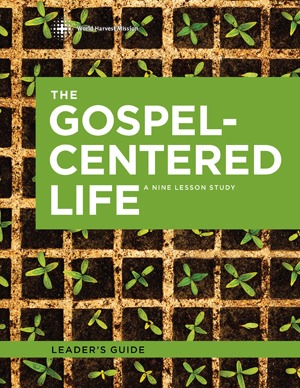
I recently came across a new study published by World Harvest Mission (Sonship folks) entitled, The Gospel-Centered Life.  It is a nine-week small group study that answers the following questions, “What is the Gospel?” “What does the gospel do in us?”  “How does the gospel work through us?”  The authors do a superb job of answering these questions in a profound, yet concise, manner. Fans of the Sonship or Gospel Transformation will recognize similar themes and chapters in this study.  One of the things I appreciate about this study is that there is no prep work on the part of the participants.  The study, which generally take an hour to complete, are usually divided up into 4 areas: Bible conversation (studying a passage of Scripture to support the theme), Read and discuss and article about the theme, and apply the theme through an exercise.  I heartily recommend this study for both Christians (old and new) and non-Christians as a marvelous tool to help them come alive to the wonder, transformative power, and beauty of the gospel.

Pastedgraphic

I just finished reviewing a new World Harvest study…

I just finished reviewing a new study published by World Harvest Mission (Sonship folks) entitled, The Gospel-Centered Life.  It is a nine-week small group study that answers the following questions, “What is the Gospel?” “What does the gospel do in us?”  “How does the gospel work through us?”  The authors do a superb job of answering these questions in a profound, yet concise, manner.  Fans of the Sonship or Gospel Transformation materials will recognize similar themes and chapters in this study.  One of the things I appreciate about this study is that there is no prep work on the part of the participants.  The study, which generally take an hour to complete, are usually divided up into 4 areas: Bible conversation (studying a passage of Scripture to support the theme), Read and discuss and article about the theme, and apply the theme through an exercise.  I heartily recommend this study for both Christians (old and new) and non-Christians as a marvelous tool to help them come alive to the wonder, transformative power, and beauty of the gospel.

Posted via email from Brett Eubank’s Blog

counterfeit gods

Today marks the release of Tim Keller’s new book, Counterfeit Gods, where he exposes the error of making good things “ultimate”…and shows readers a new path toward a hope that lasts. In light of that, I thought it particularly interesting that I came across Psalm 115 because of its treatment of idolatry.  I was particularly taken by the imagery the psalmist uses to describe the lifelessness of idols and the life that those who make idols and those who worship them try to give to them.  The context of this imagery, which is found in verses 4-8, is giving God the glory he alone deserves because of His sovereign power and abiding love.  Yet instead of giving God the glory he so richly deserves, we steal it and give it to things that are far less deserving and satisfying.  The psalmist wants us to see the absurdity of such a practice and he does it quite convincingly.  He writes:

Their idols are silver and gold, the work of human hands.
They have mouths, but do not speak; eyes, but do not see.
They have ears, but do not hear; noses, but do not smell.
They have hands, but do not feel; feet, but do not walk; and they do not make a sound in their throat.
Those who make them become like them; so do all who trust in them.

I have to say that when I first read these verses, I immediately thought of the Geico television commercial in which they “personify” a stack of money to represent the money that could have been saved by switching to Geico for car insurance.  Aside from the commercial being a bit goofy, I find it ironic that they have “personified” what has historically been one of man’s chief idols.  Like the Psalmist description, “It has a mouth but does not speak and eyes but do not see.”  Because our hearts are perpetual idol factories, there is a constant need for us to examine what we are giving our hearts to.  What thing or person are we making more ultimate than God?  What are we trusting in to make us feel fulfilled?  What’s that one thing that if you had it would make your life complete?  What is it that causes you to come alive inside?  I find these questions difficult to ask because I know my heart is full of idols and is therefore dulled and divided.  The danger of our idolatry is found in verse 8, those who make them become like them; so do all who trust in them.  What is the remedy for our idolatry.  It can only be the gospel of God’s grace.  Only when we begin to embrace and believe in the unmerited, undeserved, costly, extravagant, steadfast love of God can we really become alive.  Let us continually proclaim that to ourselves and one another.  
Geico-kash

counterfeit gods

Today marks the release of Tim Keller’s new book, Counterfeit Gods, where he exposes the error of making good things “ultimate”…and shows readers a new path toward a hope that lasts. In light of that, I thought it particularly interesting that I came across Psalm 115 because of its treatment of idolatry.  I was particularly taken by the imagery the psalmist uses to describe the lifelessness of idols and the life that those who make idols and those who worship them try to give to them.  The context of this imagery, which is found in verses 4-8, is giving God the glory he alone deserves because of His sovereign power and abiding love.  Yet instead of giving God the glory he so richly deserves, we steal it and give it to things that are far less deserving and satisfying.  The psalmist wants us to see the absurdity of such a practice and he does it quite convincingly.  He writes:

Their idols are silver and gold, the work of human hands.
They have mouths, but do not speak; eyes, but do not see.
They have ears, but do not hear; noses, but do not smell.
They have hands, but do not feel; feet, but do not walk; and they do not make a sound in their throat.
Those who make them become like them; so do all who trust in them.

I have to say that when I first read these verses, I immediately thought of the Geico television commercial in which they “personify” a stack of money to represent the money that could have been saved by switching to Geico for car insurance. Aside from the commercial being a bit goofy, I find it ironic that they have “personified” what has historically been one of man’s chief idols.  Like the Psalmist description, “It has a mouth but does not speak and eyes but do not see.”  Because our hearts are perpetual idol factories, there is a constant need for us to examine what we are giving our hearts to.  What thing or person are we making more ultimate than God?  What are we trusting in to make us feel fulfilled?  What’s that one thing that if you had it would make your life complete?  What is it that causes you to come alive inside?  I find these questions difficult to ask because I know my heart is full of idols and is therefore dulled and divided.  The danger of our idolatry is found in verse 8, those who make them become like them; so do all who trust in them.  What is the remedy for our idolatry.  It can only be the gospel of God’s grace.  Only when we begin to embrace and believe in the unmerited, undeserved, costly, extravagant, steadfast love of God can we really become alive.  Let us continually proclaim that to ourselves and one another.

Posted via email from Brett Eubank’s Blog

Anna Sloan Eubank…born 10/10/09

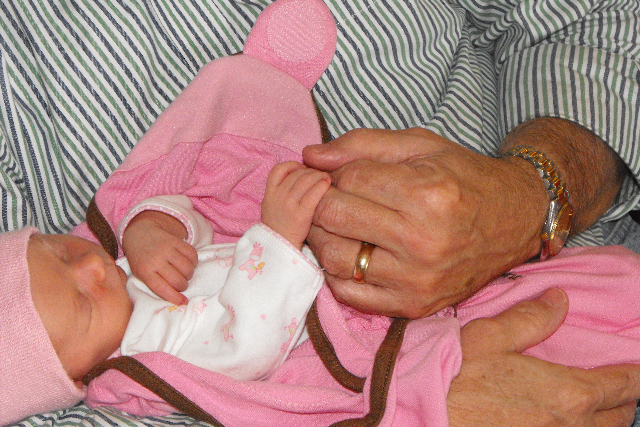
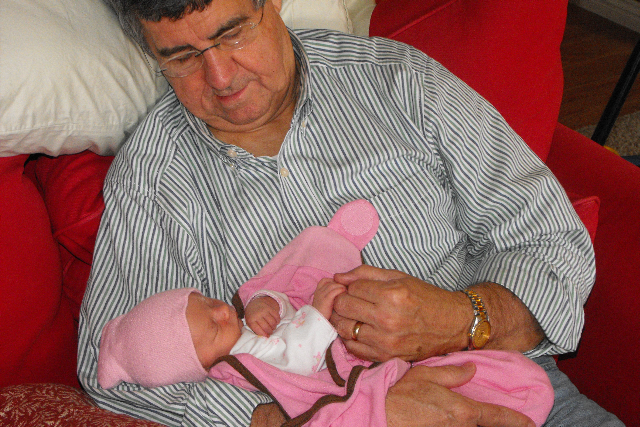
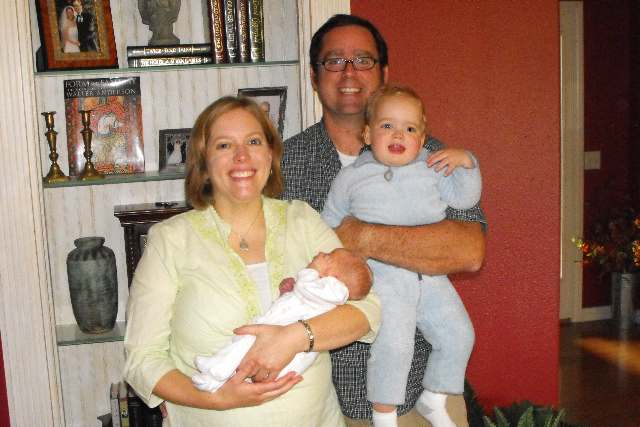
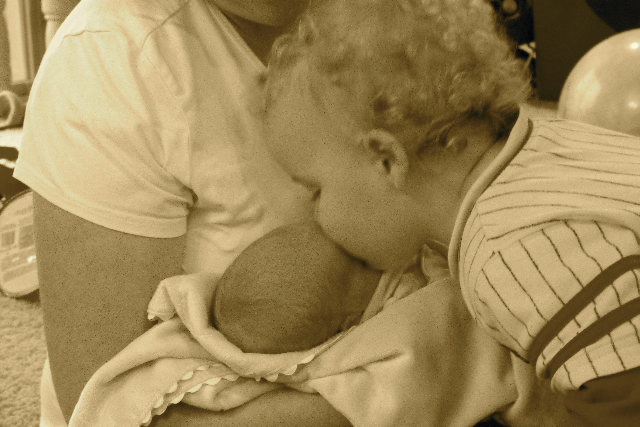
Denise and I are overwhelmed by God’s grace and mercy to us as we welcome our second child, Anna Sloan, into His world.  She was born at 6:58am on October 10 after 4 hours of labor…that’s right, 4 hours.  For a second there,  I thought we were going to be delivering her at home.  She weighed in at 6 pounds, 9 ounces and measured 20 inches long.  Denise has recovered beautifully and Anna Sloan has transitioned smoothly.  We  welcomed Brett’s mother on Saturday and she has been indispensable in helping us transition.  We welcome any and all meals by friends and strangers.

DSCF0019

DSCF0016

DSCF0014

DSCF0010

DSCF0003

lost in prayer?

lostandfound
I was reading through chapter 4 of Tim Keller’s book, The Prodigal God, this morning and was struck by his description and illustration of an elder brother’s prayer life in light of a lack of assurance of the love and acceptance of his father.  He writes:

Though elder brothers may be diligent in prayer, there is no wonder, awe, intimacy, or delight in their conversations with God.  Think of three kinds of people–a business associate you don’t really like, a friend you enjoy doing things with, and someone you are in love with, and who is in love with you. Your conversations with the business associate will be quite goal oriented.  You won’t be interested in chitchat.  With your friend you may open your heart about some of the problems you are having.  But with your lover you will sense a strong impulse to speak about what  is beautiful about him or her.  These three kinds of discourse are analogous to forms of prayer that have been called “petition,” “confession,” and “adoration.”  The deeper the love relationship, the more the conversation heads towards the personal, and toward affirmation and praise.  Elder brothers may be disciplined in observing regular times of prayer, but their prayers are almost wholly taken up with a recitation of needs and petitions, not spontaneous, joyful praise.
The elder brother seems lost to the heart of prayer, which is aimed not at asking God to give to us but in us giving ourselves to God…being “lost” in the power, beauty, wisdom and love of God.  I wish that I could say that my prayer life always looks like that, but I find that it bears a striking resemblance to the elder brother-type, using prayer as a means to have my needs met.  It seems quite one-sided and doesn’t do anything for deepening my love for God.  If anything, it depersonalizes our relationship and I can only hope that Jackson and Anna Sloan don’t treat me that way as their father.