Do not be afraid…

If you heard my sermon, “Managing The Unamageable”,  last Sunday, then you’ll remember the fear the disciples experienced in the midst of the great storm and the great calm that followed it.  The first fear (cowardice) caused them to question Christ’s love for them…”Don’t you care that we’re perishing?  The second fear (holy awe) caused them to question Christ’s power/nature: “Who is this that even the wind and the waves obey him.”  Jesus was exploding into the disciple’s minds like fireworks on the fourth of July…equal parts terror because fireworks are loud and part awe because fireworks are mesmerizing.  I don’t know about you, but I need the glory and grace of Jesus to perpetually explode into my mind, heart and soul.  

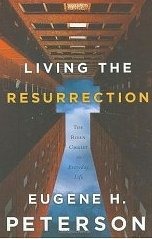
I’m reading Eugene Peterson’s book, Living The Resurrection right now (Note: CPO is selling it for $5 right now).  In the first chapter he is talking about the wonder of the resurrection and he contrasts the fear the Roman guards assigned to guard Jesus’ tomb experienced and the fear the two Mary’s who came to anoint Jesus’ body the morning after the Sabbath also experienced.  He writes:

I love the contrast between those Roman guards – insensible and sprawled on the ground, paralyzed by fear – and the two exuberant women kneeling on the same ground energized by fear.  It’s the same word in both cases – fear.  But it’s not the same thing.  There is a fear that incapacitates us for dealing with God, and there is a fear that pulls us out of our preoccupation with ourselves, our feelings, or our circumstances into a world of wonder.  It pulls us out of ourselves into the very action of God.

May you and I be overcome with that kind of energizing fear that pulls us out of our self-preoccupation and into wonder.  May this Easter season find you coming alive more and more to the wonder of the Gospel of God’s grace.
Pastedgraphic

Do not be afraid…

If you heard my sermon, “Managing The Unamageable”,  last Sunday, then you’ll remember the fear the disciples experienced in the midst of the great storm and the great calm that followed it.  The first fear (cowardice) caused them to question Christ’s love for them…”Don’t you care that we’re perishing?  The second fear (holy awe) caused them to question Christ’s power/nature: “Who is this that even the wind and the waves obey him.”  Jesus was exploding into the disciple’s minds like fireworks on the fourth of July…equal parts terror because fireworks are loud and part awe because fireworks are mesmerizing.  I don’t know about you, but I need the glory and grace of Jesus to perpetually explode into my mind, heart and soul.  

I’m reading Eugene Peterson’s book, Living The Resurrection right now (Note: CPO is selling it for $5 right now).  In the first chapter he is talking about the wonder of the resurrection and he contrasts the fear the Roman guards assigned to guard Jesus’ tomb experienced and the fear the two Mary’s who came to anoint Jesus’ body the morning after the Sabbath also experienced.  He writes:

I love the contrast between those Roman guards – insensible and sprawled on the ground, paralyzed by fear – and the two exuberant women kneeling on the same ground energized by fear.  It’s the same word in both cases – fear.  But it’s not the same thing.  There is a fear that incapacitates us for dealing with God, and there is a fear that pulls us out of our preoccupation with ourselves, our feelings, or our circumstances into a world of wonder.  It pulls us out of ourselves into the very action of God.

May you and I be overcome with that kind of energizing fear that pulls us out of our self-preoccupation and into wonder.  May this Easter season find you coming alive more and more to the wonder of the Gospel of God’s grace.

Pastedgraphic

the engine love runs on

Pastedgraphic

I came across this quote from C. S. Lewis in his book, Mere Christianity, when Denise and I were engaged and thought enough of it to include it in our wedding program.  In reading it again, it’s jus as true now as it was then.

“Love, as distinct from “being in love”—is not merely a feeling. It is a deep unity, maintained by the will and deliberately strengthened by habit; reinforced [in Christian marriages] by the grace which both parents ask, and receive, from God. They can have this love for each other even at those moments when they do not like each other; as you love yourself even when you do not like yourself. They can retain this love even when each would easily, if they allowed themselves, be “in love” with someone else. “Being in love” first moved them to promise fidelity: this quieter love enables them to keep the promise. It is on this love that the engine of marriage is run: being in love was the explosion that started it.”