why we confess our sins in worship

The best answer I have heard thus far comes from Bryan Chapell in his book, Christ-Centered Worship:
Recognition of who God truly is leads to awareness of who we really are.  Some have questioned whether confession of sin has a place in contemporary worship.  Such acknowledgment of our shortcomings may be perceived as a “downer” or “turnoff” to congregants who have little background to church.  However, it is reasonable to question whether worship is Christian worship at all if there is no opportunity for confession.  Human confession is the reflex response of divine encounter.  If there really has been no confession in a worship service, then there has been no real apprehension of God.  His praise necessitates our humility.  We cannot truly honor his worth without sensing our unworthiness.  We cannot really see who he is and fail to bow.

the engine love runs on

I came across this quote from C. S. Lewis in his book, Mere Christianity, when Denise and I were engaged and thought enough of it to include it in our wedding program.  In reading it again, it’s jus as true now as it was then.

“Love, as distinct from “being in love”—is not merely a feeling. It is a deep unity, maintained by the will and deliberately strengthened by habit; reinforced [in Christian marriages] by the grace which both parents ask, and receive, from God. They can have this love for each other even at those moments when they do not like each other; as you love yourself even when you do not like yourself. They can retain this love even when each would easily, if they allowed themselves, be “in love” with someone else. “Being in love” first moved them to promise fidelity: this quieter love enables them to keep the promise. It is on this love that the engine of marriage is run: being in love was the explosion that started it.”

why we confess our sins in worship

The best answer I have heard thus far comes from Bryan Chapell in his book, Christ-Centered Worship:
Recognition of who God truly is leads to awareness of who we really are.  Some have questioned whether confession of sin has a place in contemporary worship.  Such acknowledgment of our shortcomings may be perceived as a “downer” or “turnoff” to congregants who have little background to church.  However, it is reasonable to question whether worship is Christian worship at all if there is no opportunity for confession.  Human confession is the reflex response of divine encounter.  If there really has been no confession in a worship service, then there has been no real apprehension of God.  His praise necessitates our humility.  We cannot truly honor his worth without sensing our unworthiness.  We cannot really see who he is and fail to bow.

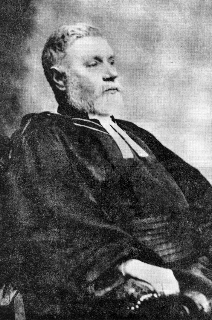
The Story behind the hymn, O Love That Will Not Let Me Go by George Matheson

If you were in the service this morning, I made mention of the story behind the hymn we sang, O Love That Will Not Let Me Go by George Matheson.  Here is the story as told by the folks from Indelible Grace.

“O Love That Will Not Let Me Go” written on the evening of Matheson’s sister’s marriage. His whole family had went to the wedding and had left him alone. And he writes of something which had happened to him that caused immense mental anguish. There is a story of how years before, he had been engaged until his fiancé learned that he was going blind, and there was nothing the doctors could do, and she told him that she could not go through life with a blind man. He went blind while studying for the ministry, and his sister had been the one who had taken care of him all these years, but now she is gone. He had been a brilliant student, some say that if he hadn’t went blind he could have been the leader of the church of Scotland in his day. He had written a learned work on German theology and then wrote “The Growth of The Spirit of Christianity.” Louis Benson says this was a brilliant book but with some major mistakes in it. When some critics pointed out the mistakes and charged him with being an inaccurate student he was heartbroken. One of his friends wrote, “When he saw that for the purposes of scholarship his blindness was a fatal hindrance, he withdrew from the field – not without pangs, but finally.” So he turned to the pastoral ministry, and the Lord has richly blessed him, finally bringing him to a church where he regularly preached to over 1500 people each week. But he was only able to do this because of the care of his sister and now she was married and gone. Who will care for him, a blind man? Not only that, but his sister’s marriage brought fresh reminder of his own heartbreak, over his fiancé’s refusal to “go through life with a blind man.” It is the midst of this circumstance and intense sadness that the Lord gives him this hymn – written he says in 5 minutes! Looking back over his life, he once wrote that his was “an obstructed life, a circumscribed life… but a life of quenchless hopefulness, a life which has beaten persistently against the cage of circumstance, and which even at the time of abandoned work has said not “Good night” but “Good morning.” How could he maintain quenchless hopefulness in the midst of such circumstances and trials? His hymn gives us a clue. “I trace the rainbow in the rain, and feel the promise is not vain” The rainbow image is not for him “If the Lord gives you lemons make lemonade” but a picture of the Lord’s commitment! It is a picture of the battle bow that appears when the skies are darkening and threaten to open up and flood the world again in judgment. But then we see that the battle bow is turned not towards us – but toward the Lord Himself!

The Story behind the hymn, O Love That Will Not Let Me Go by George Matheson

“O Love That Will Not Let Me Go” written on the evening of Matheson’s sister’s marriage. His whole family had went to the wedding and had left him alone. And he writes of something which had happened to him that caused immense mental anguish. There is a story of how years before, he had been engaged until his fiancé learned that he was going blind, and there was nothing the doctors could do, and she told him that she could not go through life with a blind man. He went blind while studying for the ministry, and his sister had been the one who had taken care of him all these years, but now she is gone. He had been a brilliant student, some say that if he hadn’t went blind he could have been the leader of the church of Scotland in his day. He had written a learned work on German theology and then wrote “The Growth of The Spirit of Christianity.” Louis Benson says this was a brilliant book but with some major mistakes in it. When some critics pointed out the mistakes and charged him with being an inaccurate student he was heartbroken. One of his friends wrote, “When he saw that for the purposes of scholarship his blindness was a fatal hindrance, he withdrew from the field – not without pangs, but finally.” So he turned to the pastoral ministry, and the Lord has richly blessed him, finally bringing him to a church where he regularly preached to over 1500 people each week. But he was only able to do this because of the care of his sister and now she was married and gone. Who will care for him, a blind man? Not only that, but his sister’s marriage brought fresh reminder of his own heartbreak, over his fiancé’s refusal to “go through life with a blind man.” It is the midst of this circumstance and intense sadness that the Lord gives him this hymn – written he says in 5 minutes! Looking back over his life, he once wrote that his was “an obstructed life, a circumscribed life… but a life of quenchless hopefulness, a life which has beaten persistently against the cage of circumstance, and which even at the time of abandoned work has said not “Good night” but “Good morning.” How could he maintain quenchless hopefulness in the midst of such circumstances and trials? His hymn gives us a clue. “I trace the rainbow in the rain, and feel the promise is not vain” The rainbow image is not for him “If the Lord gives you lemons make lemonade” but a picture of the Lord’s commitment! It is a picture of the battle bow that appears when the skies are darkening and threaten to open up and flood the world again in judgment. But then we see that the battle bow is turned not towards us – but toward the Lord Himself!

Do You Read The Bible or Does The Bible Read You?

Pastedgraphic

 John Sott reminds me how tempting it is for me to read only passages that encourage and comfort me and not the ones that challenge and disturb me.  In that sense I find myself merely reading the Bible instead of letting the Bible read me – reading what I want to read and saying what I want Scripture to say, when in reality I need to place myself under the whole counsel of God’s Word. 

We come to our reading of the Bible with our own agenda, bias, questions, preoccupations, concerns and convictions, and, unless we are extremely careful, we impose these on the biblical text.  We may sincerely pray before we read, ‘Open my eyes that I may see wonderful things in your law’ (Ps. 119:18), but still the same non-communication may persist.  For even that introductory prayer, though to be sure it is taken from the Psalter, is suspect because it lays down the kind of message we want to hear.   ‘Please, Lord, I want to see some “wonderful thing” in your word.’   But he may reply, ‘What makes you think I have only “wonderful things” to show you?  As a matter of fact, I have some rather “disturbing things” to show you today.  Are you prepared to receive them?’   ‘Oh no, Lord, please not’, we stammer in reply.  ‘I come to Scripture only to be comforted; I really do not want to be challenged or disturbed.’ –From “The Contemporary Christian” (London and Downers Grove: IVP, 1992), p. 190.

One way that I am helped in this is preaching through entire books of the Bible (rather than select passages), so that I must deal with the text as it is and as it follows what comes before and precedes what comes after.  May God be gracious to me as he disturbs me and confronts my gospel negligence through his living and active Word.